International Opinion, Foreign Influence and Elite Networks
International opinion and indices, foreign influence, representation, elite networks, and criminal and street power.
The 19 figures in this chapter are reproduced from the report of Atlas research module M12, with the passage of the study that explains each. They keep the study’s own labels and colours: RW denotes the Hindutva-aligned bloc and LW the coalition that contests it (see A Note on Terms).
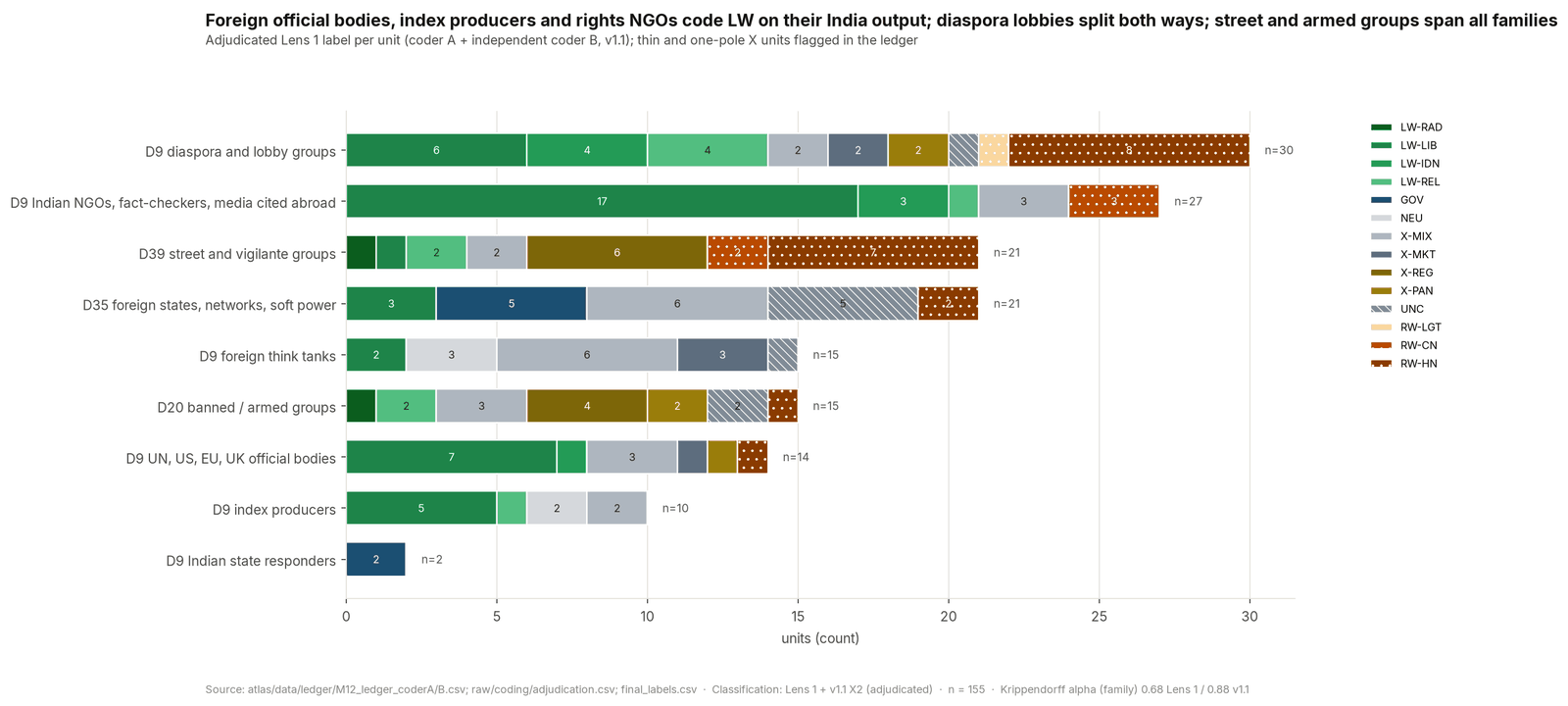
58.1Results
Source: Atlas research module M12, “Results”.
How.
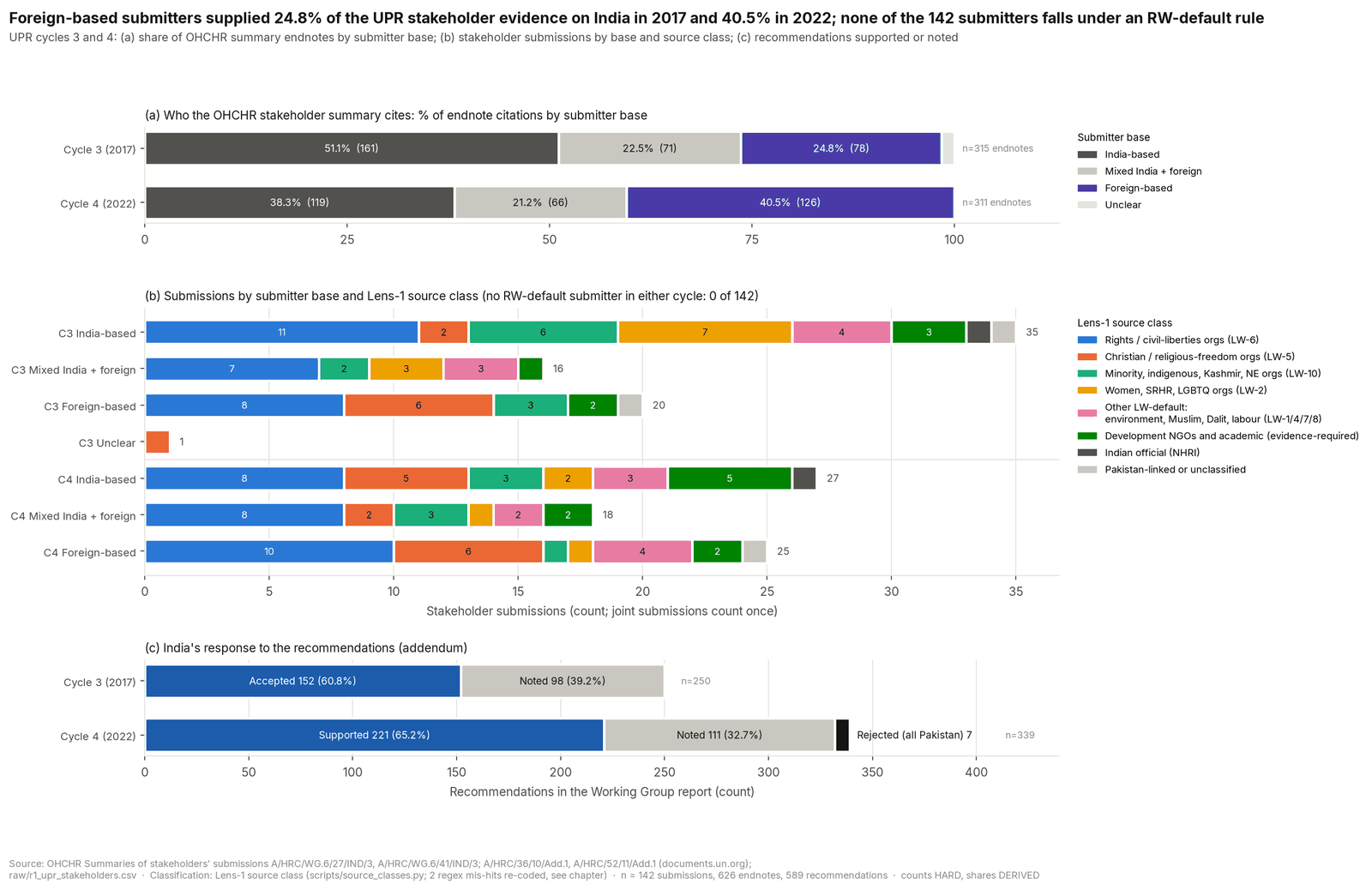
58.22. Universal Periodic Review (UPR), cycles 3 and 4
Source: Atlas research module M12, “2. Universal Periodic Review (UPR), cycles 3 and 4”.
---
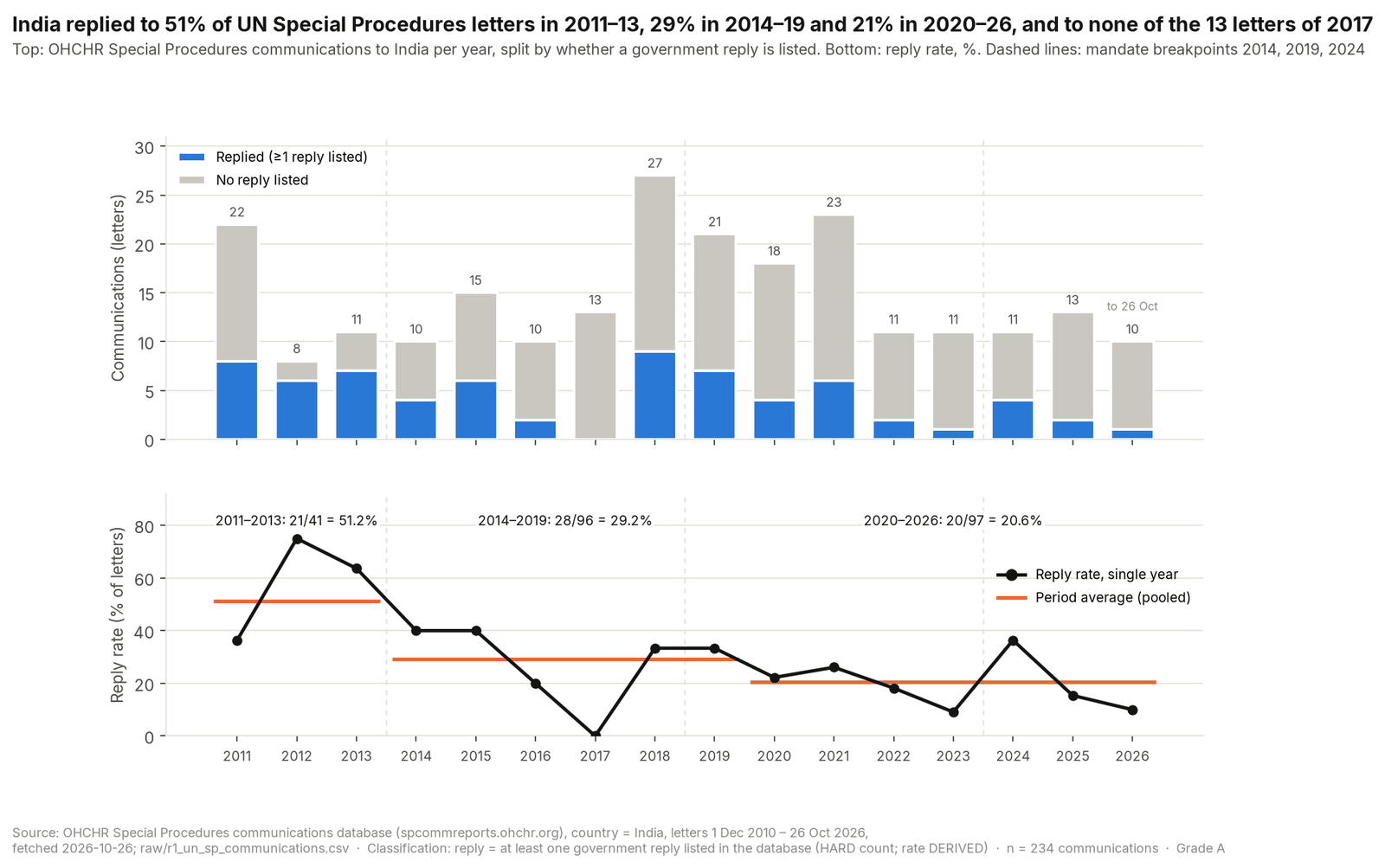
58.33. UN Special Procedures and OHCHR
Source: Atlas research module M12, “3. UN Special Procedures and OHCHR”.
---
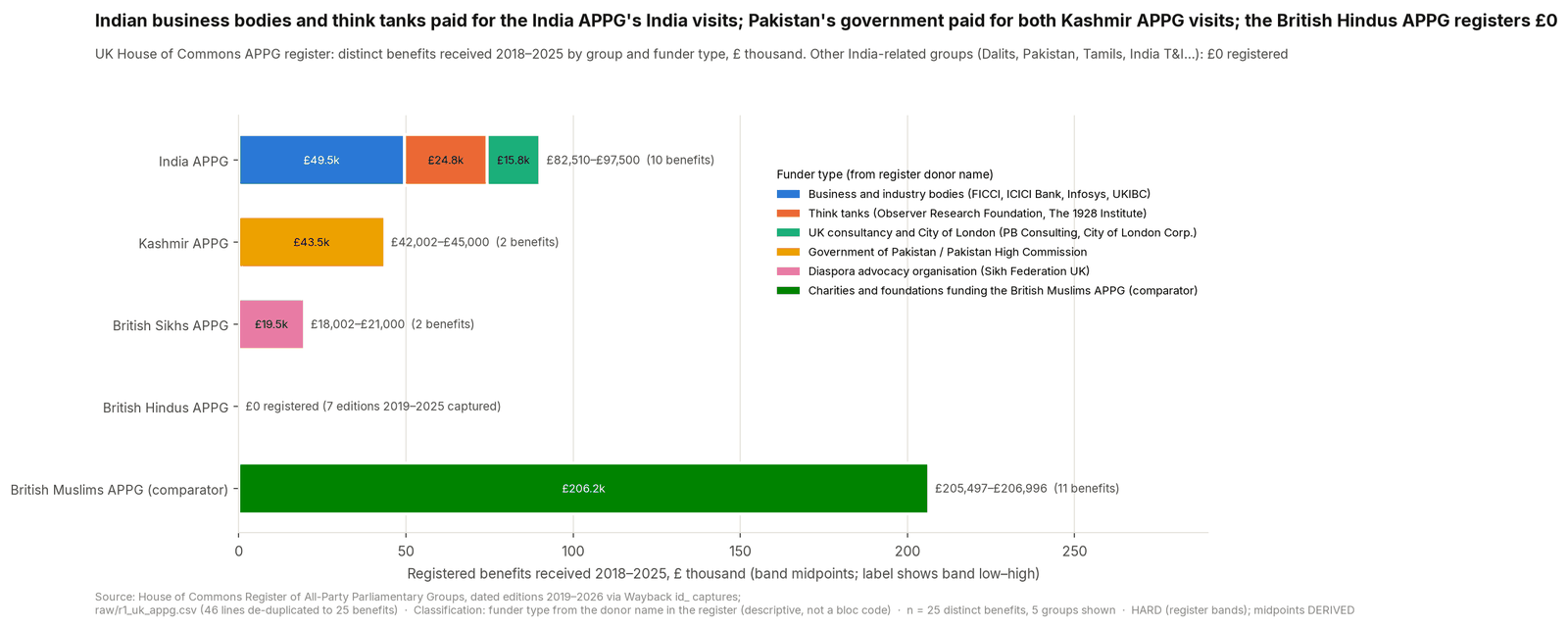
58.48a. APPGs: registered benefits (£) by group and funder
Source: Atlas research module M12, “8a. APPGs: registered benefits (£) by group and funder”.
---
58.511. The Indian sources behind each foreign report
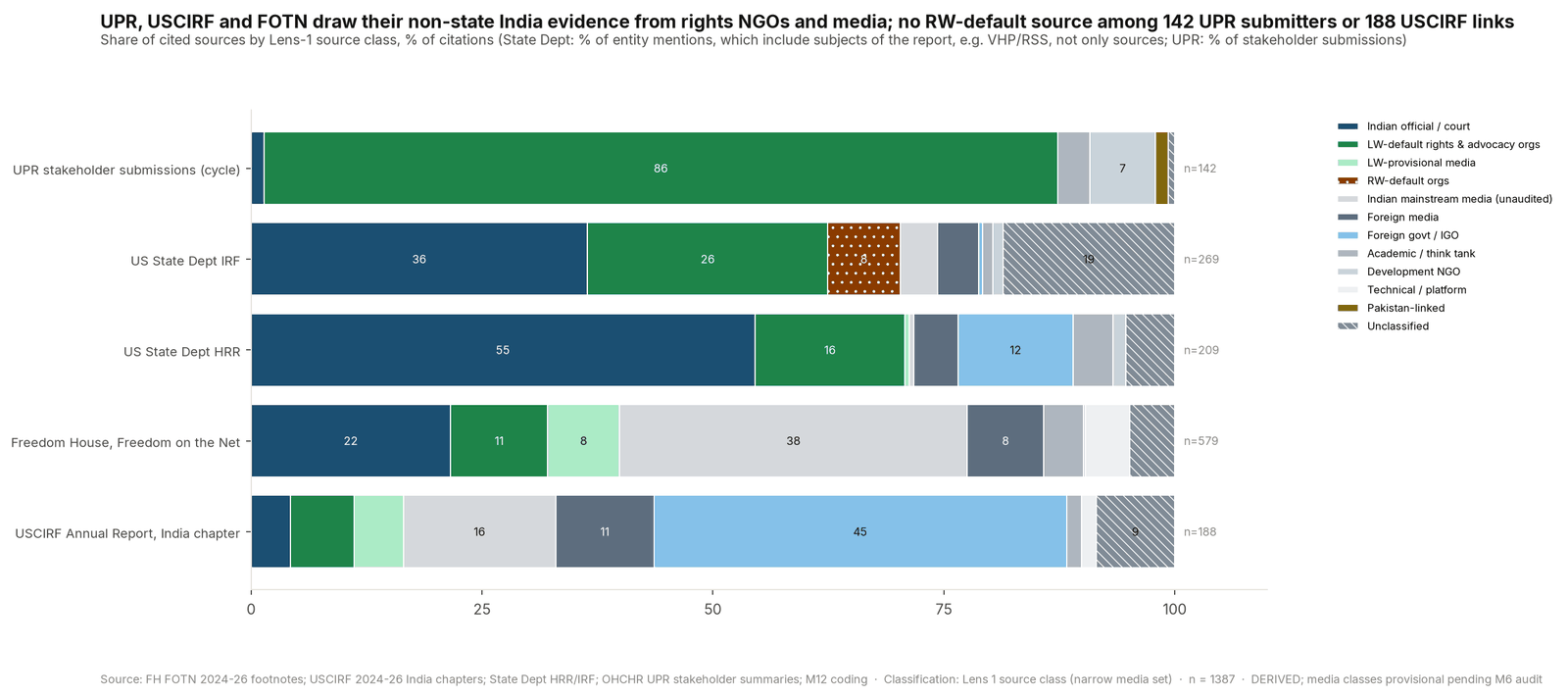
Source: Atlas research module M12, “11. The Indian sources behind each foreign report”.
The question. Do these bodies rest on a narrow, one-sided source base?
58.62. India's scores, 2014–2026
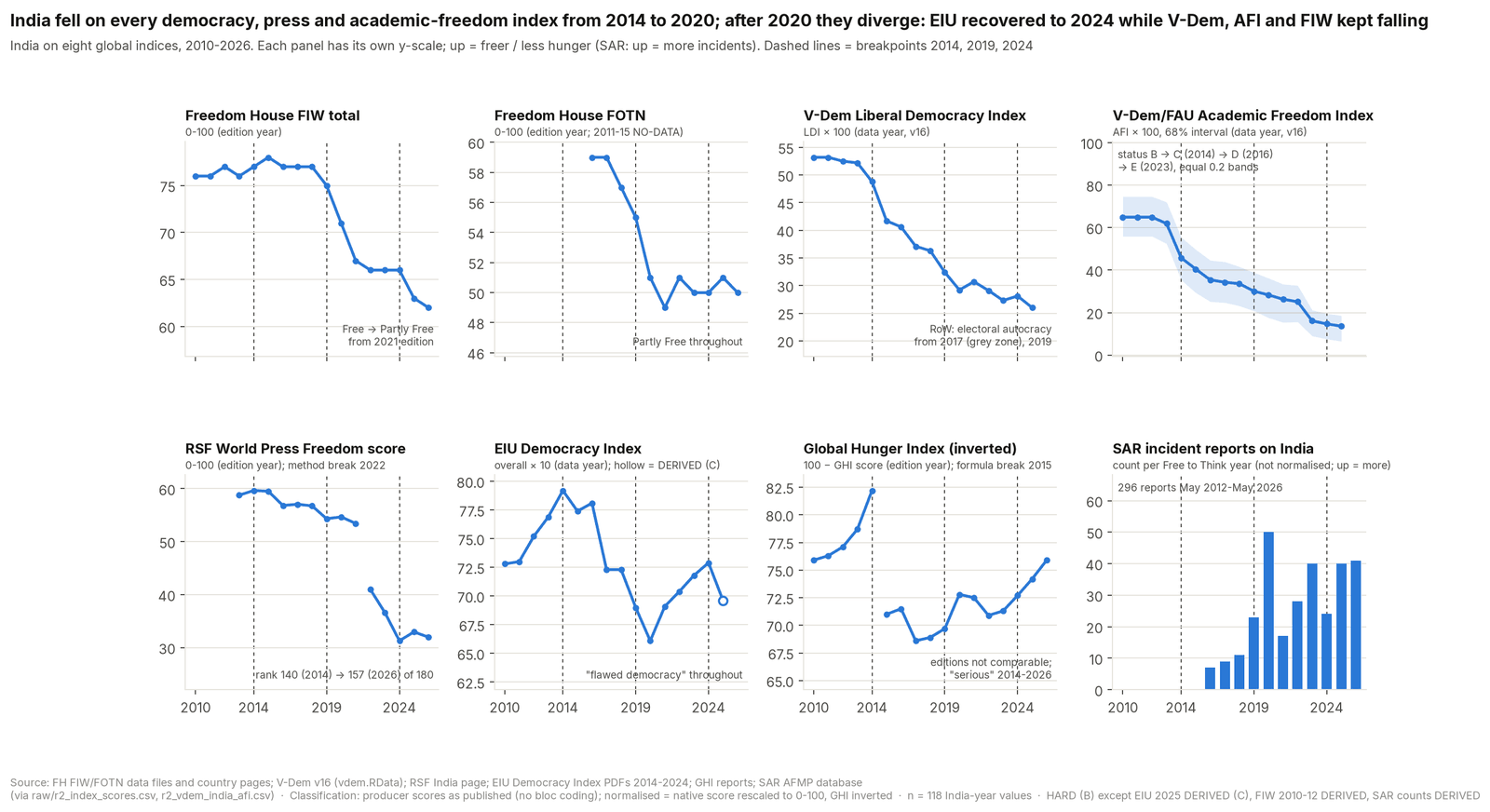
Source: Atlas research module M12, “2. India's scores, 2014–2026”.
Figure D9b-1 (SVG). India on eight indices, 2010–2026, one panel per index, each on its own y-scale.
58.74. Sourcing test: independent measurements or recycled sources?
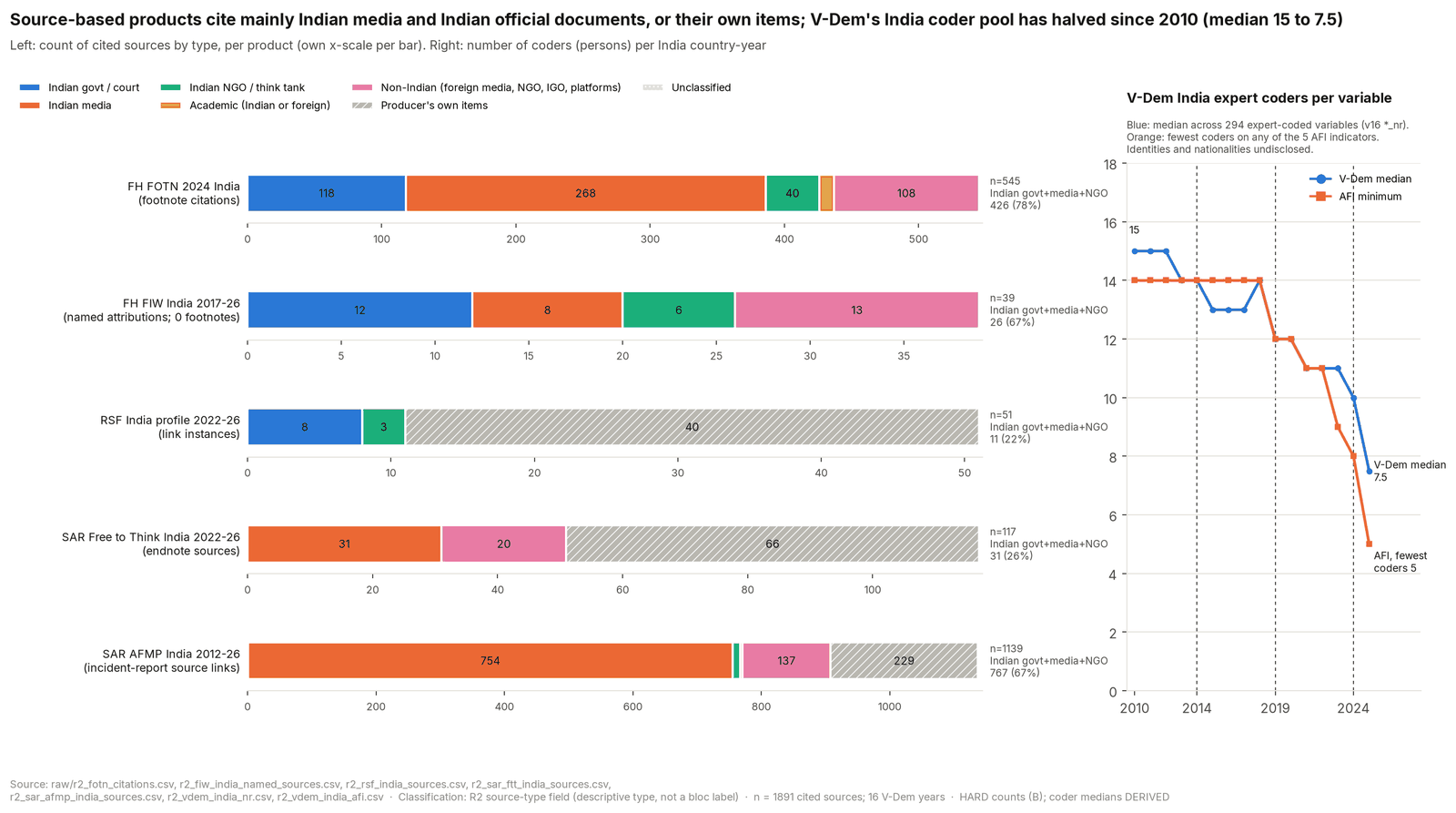
Source: Atlas research module M12, “4. Sourcing test: independent measurements or recycled sources?”.
The question. Do these indices measure India independently of one another, or do they draw on a narrow, shared set of Indian sources? The answer below rests only on the R2 counts and is stated in both directions.
58.84c. Verdict
Source: Atlas research module M12, “4c. Verdict”.
Reuse and discrepancies in fig_d9_sourcing (all four were fixed by the lead on 27 Oct: source line, missing-product specs removed and documented, title, layout). fig_d9_sourcing.png is still accurate against the R2 data: its FOTN bar (n = 579) and every Lens-1 class count match r2_fotn_citations.csv and the companion CSV when re-run with source_classes.classify. Four discrepancies should be fixed:
58.95. Who cites the indices in India (Lens 5)
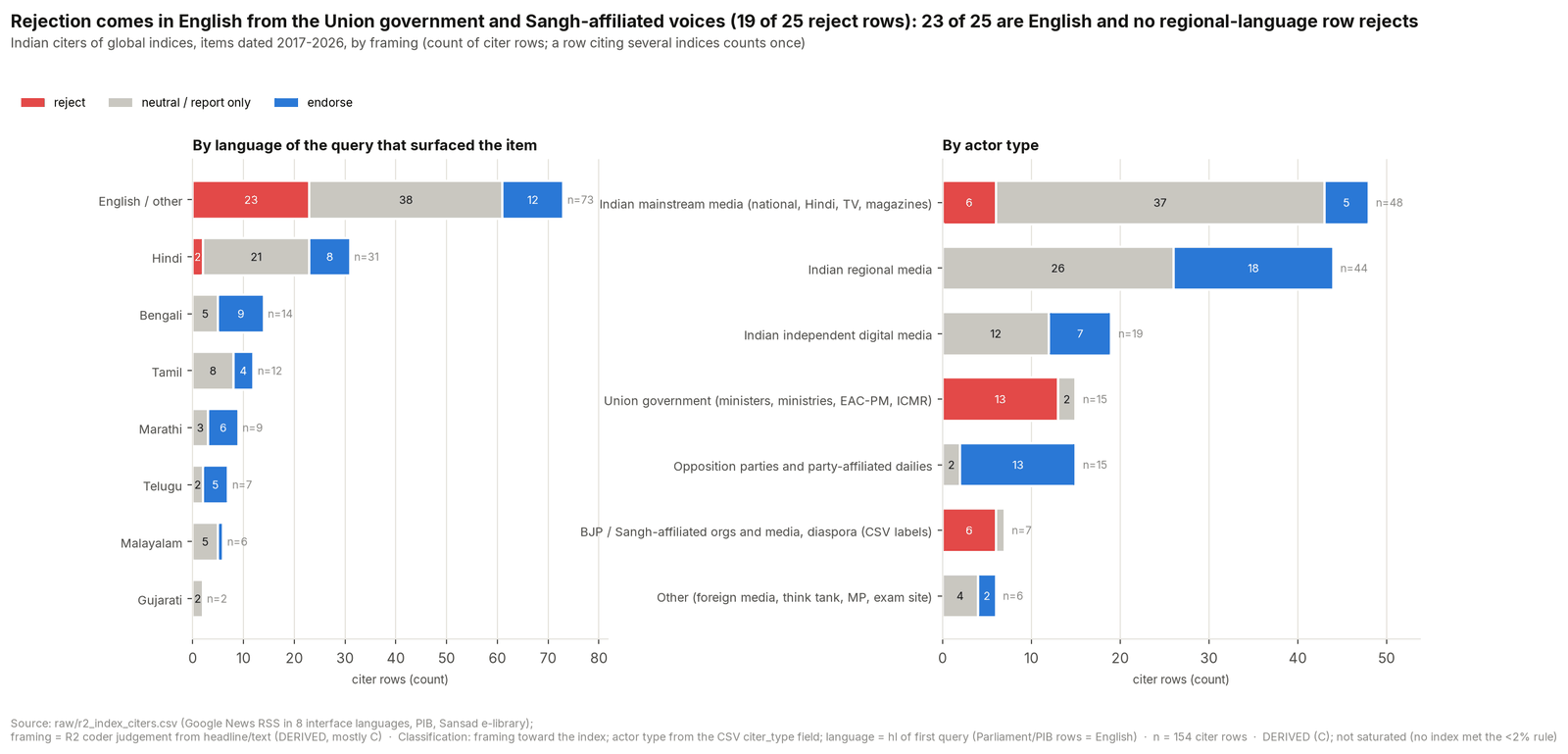
Source: Atlas research module M12, “5. Who cites the indices in India (Lens 5)”.
Table D9b-7. By actor type (DERIVED)
58.105. T53-d: information operations, by platform, origin, target and side
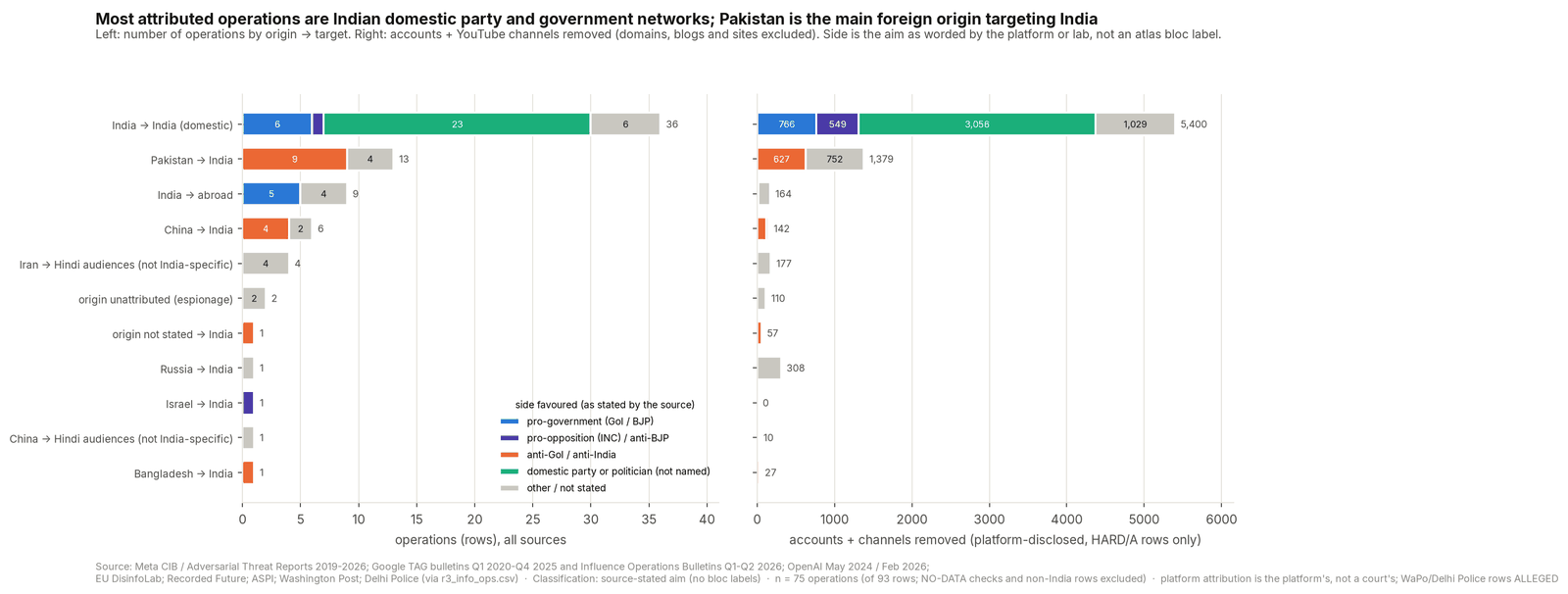
Source: Atlas research module M12, “5. T53-d: information operations, by platform, origin, target and side”.
Figure D35-1 (SVG). Information operations by origin → target, stacked by the side the source says the operation favoured. Left: count of operations. Right: accounts and channels removed.
58.118.1 Budget series (Rs crore, nominal; HARD / A)
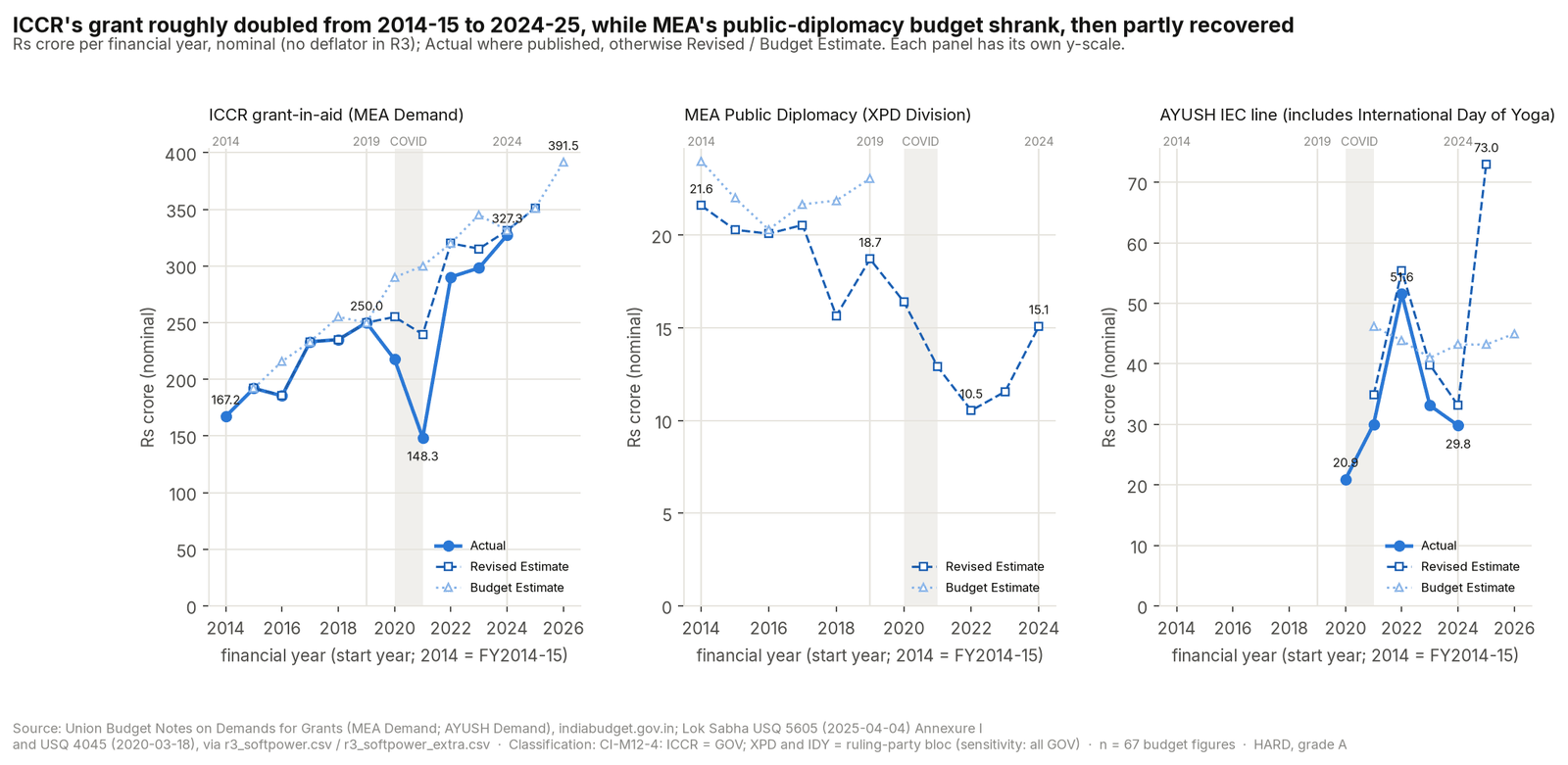
Source: Atlas research module M12, “8.1 Budget series (Rs crore, nominal; HARD / A)”.
Trends at the breakpoints.
58.129. V47: foreign influence flow map
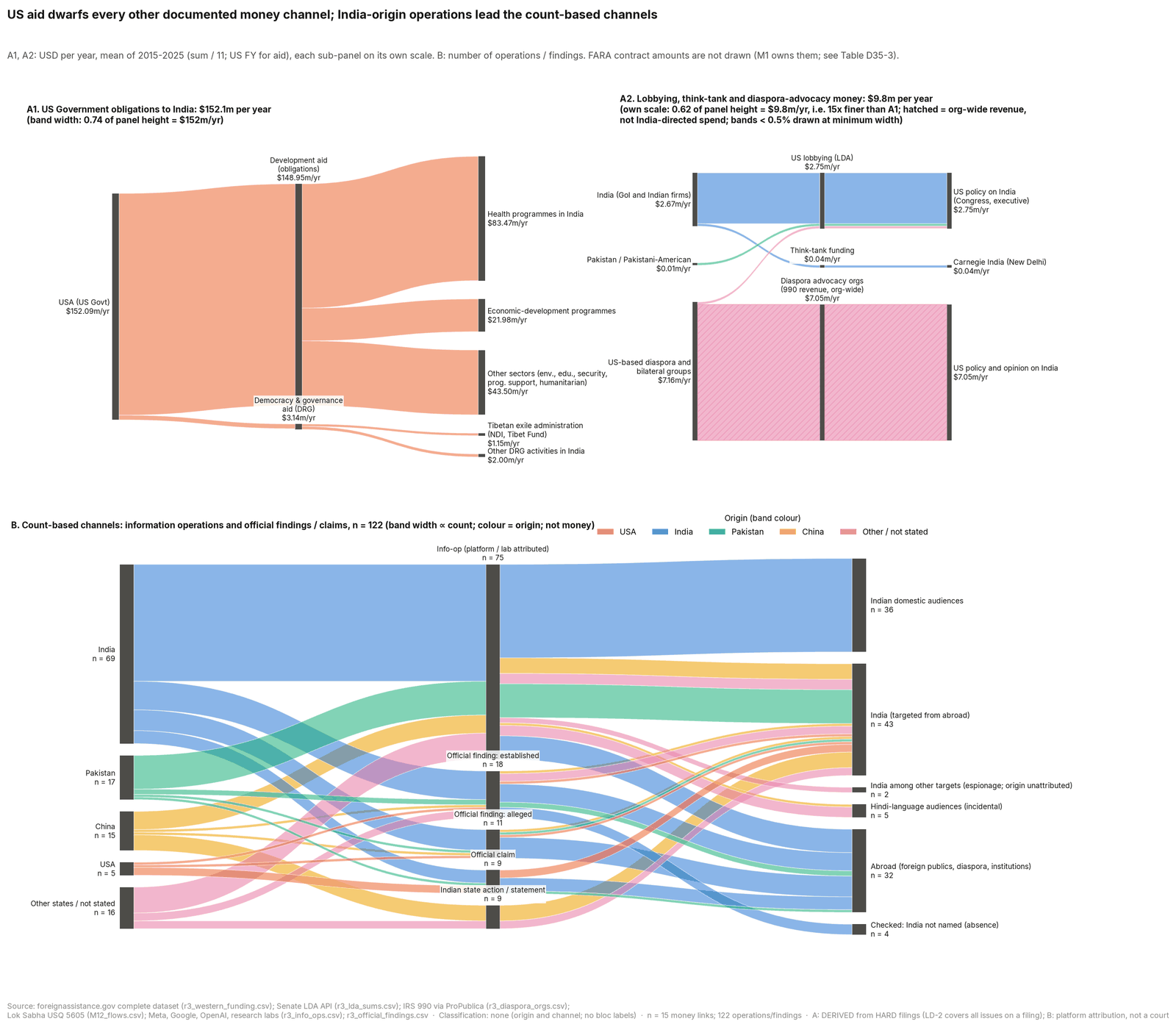
Source: Atlas research module M12, “9. V47: foreign influence flow map”.
---
58.131. Key findings
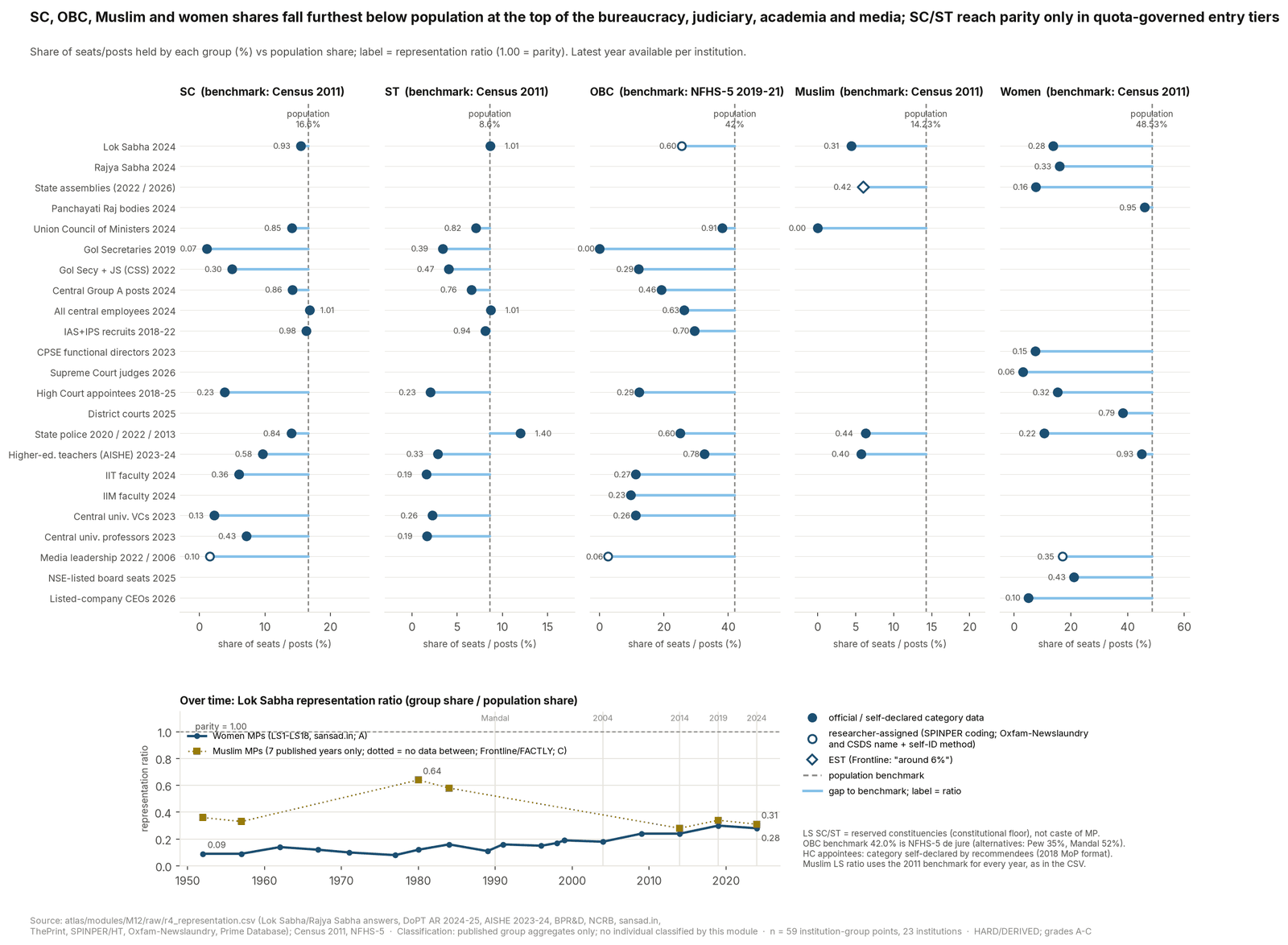
Source: Atlas research module M12, “1. Key findings”.
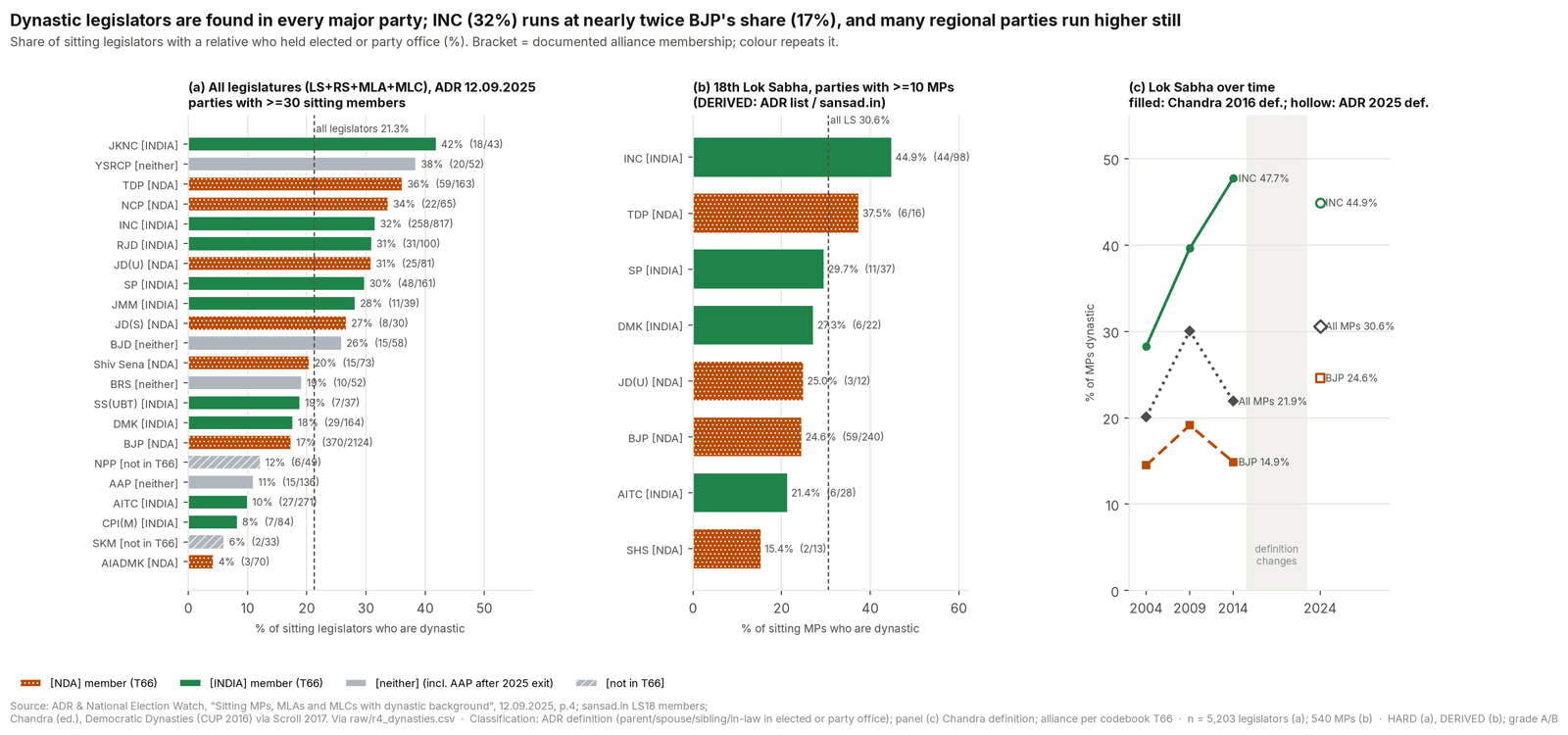
Figure V44 (SVG). The figure has 59 institution-group points across 23 institutions.
Source: Atlas research module M12, “1. Key findings”.
Figure: dynastic share by party (SVG).
Source: Atlas research module M12, “1. Key findings”.
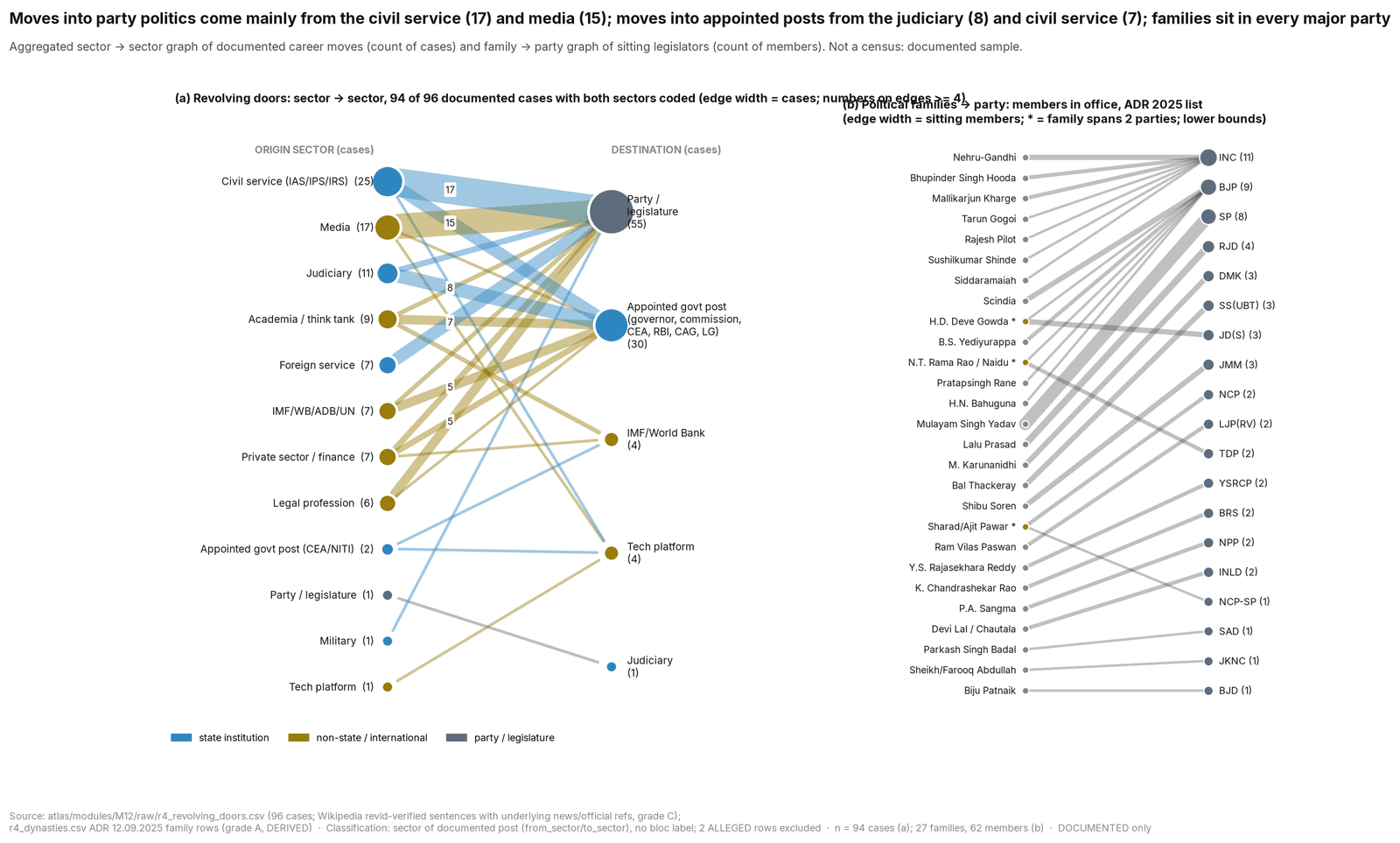
Figure: dynastic share by party (SVG).
58.14Key findings
Source: Atlas research module M12, “Key findings”.
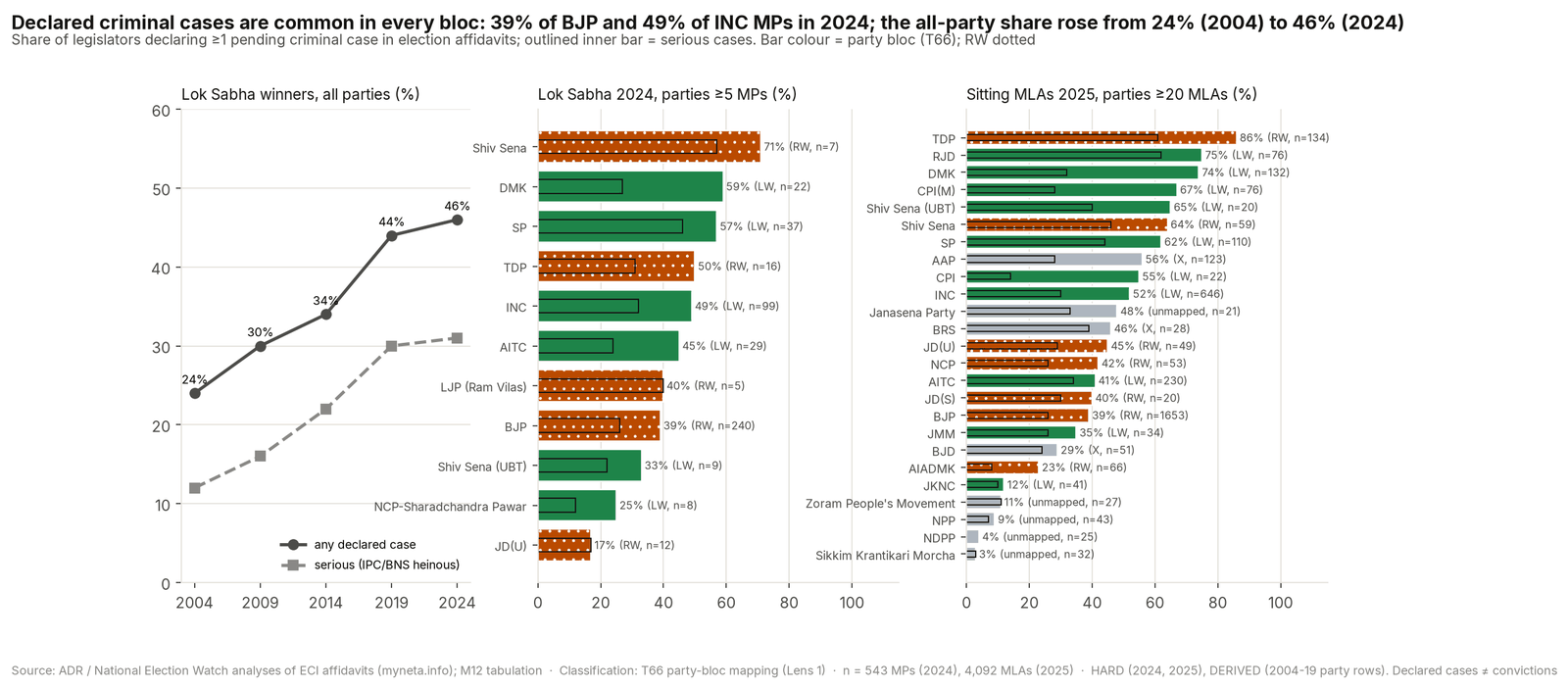
Figure D38. Reused from a5_fig_adr.py after review; it carries the required title, unit, source, n, basis and confidence line. Note: its left panel plots the live myneta database (2019: 236/542 = 44%; 2009 serious 89 = 16%). The table below uses the ADR printed report (2019: 233/539 = 43%; 2009 serious 76 = 14%). R5 §1 documents a 1–13-row difference between the two.
58.15T54-C. Riots and vigilante incidents and outcomes
Source: Atlas research module M12, “T54-C. Riots and vigilante incidents and outcomes”.
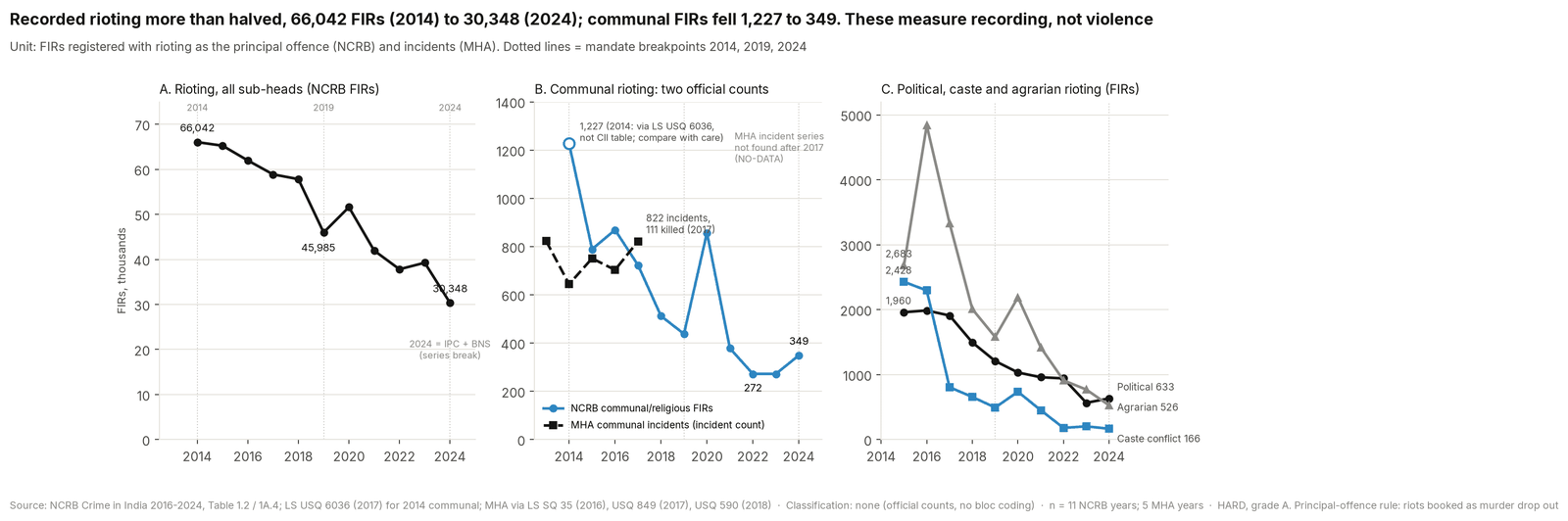
Figure D39-1. NCRB rioting FIRs (A), the two official communal series (B) and the political, caste and agrarian sub-heads (C). The 2014 communal point comes from an MHA reply quoting NCRB, not from the CII table, and is drawn hollow. 2024 combines IPC and BNS.
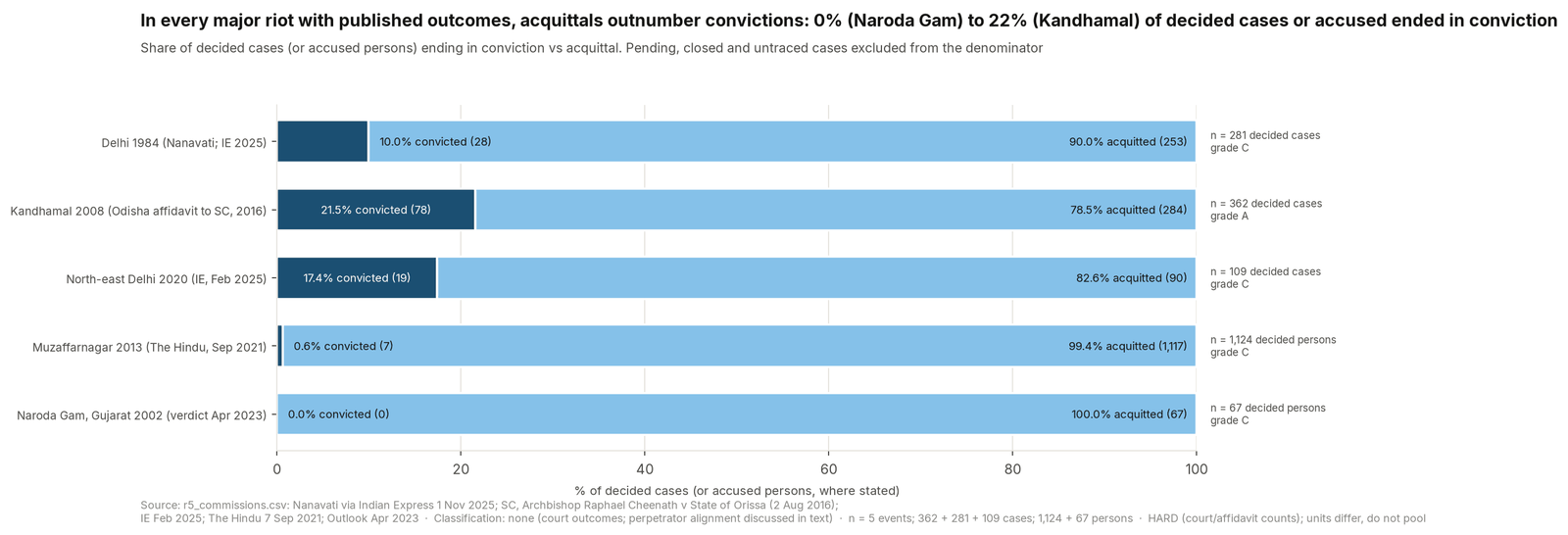
Source: Atlas research module M12, “T54-C. Riots and vigilante incidents and outcomes”.
Figure D39-2. Decided-case outcomes only. Units differ by event (cases vs accused persons), so the bars are not pooled.
58.16T54-D. Enforcement findings with case status
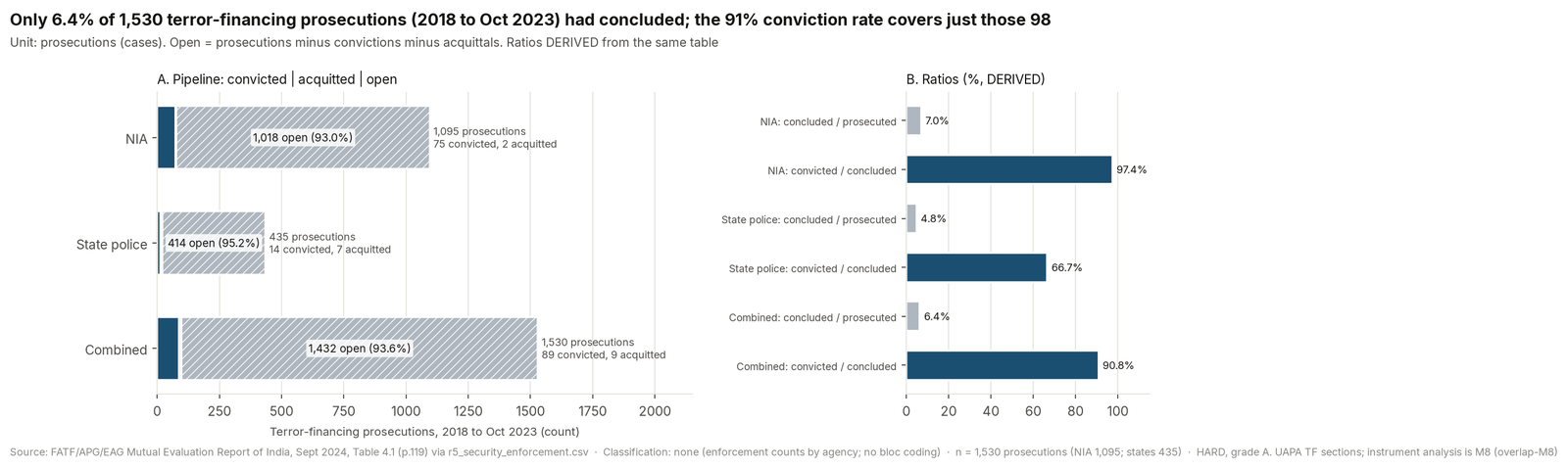
Source: Atlas research module M12, “T54-D. Enforcement findings with case status”.
No-double-count rule: the Hurriyat and PFI TF rows are already counted inside the FATF 1,530. NIA's 2025 figures (66 convictions) cover a later period and every crime category, so they are not added to FATF's 89.